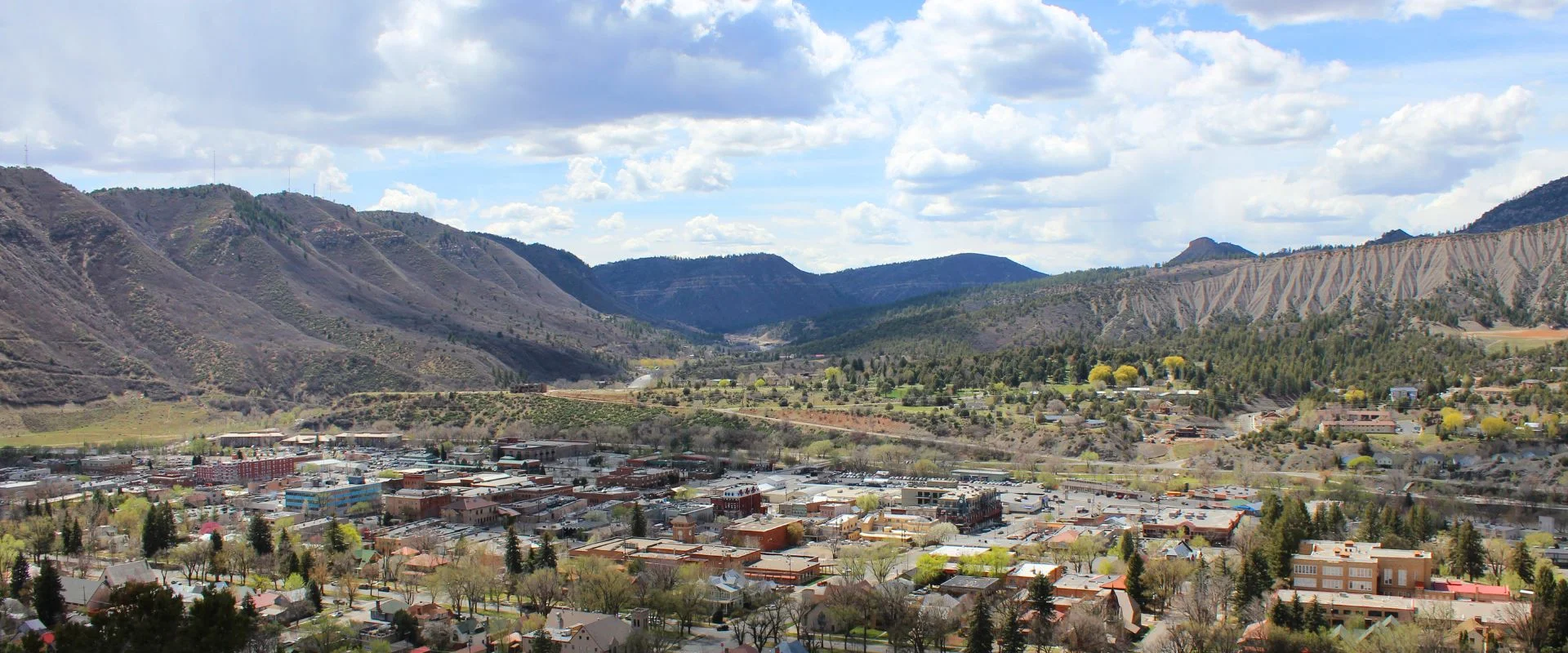
Silverton looks close on the map. It doesn't feel that way in a van. The drive up from Durango crosses two passes over 10,600 feet — Coal Bank and Molas — before the road drops you back into town at 9,318 feet. Somewhere around the second summit your ears pop. The aspens thin out. Spruce and bare rock take over. I've rolled into Silverton in July with the windows down, and in September with frost already forming on the windshield by nine at night. Same town. Same gravel pull-off outside of town. Completely different trip. Here's what actually matters if you're showing up in a van instead of with a room reservation.
First, the Altitude Math
Silverton is one of the highest towns in the country. It sits at 9,318 feet (Town of Silverton). That number changes more about your trip than the view does. Water boils a little cooler up here. Your propane stove runs rich. The swing between a warm afternoon and a cold night can hit 40 degrees, even in July. Bring a sleeping bag rated for real cold, not the 50-degree bag that worked fine at the beach. Give yourself a slow first evening too, especially if you drove straight up from Durango or Albuquerque. Altitude headaches show up a lot more than people plan for.
Where to Park: Dispersed Camping on San Juan National Forest Land
Silverton sits inside San Juan National Forest. Dispersed camping — camping outside a developed campground, with no hookups and no services — is legal on most of it. But follow the Forest Service's own rules instead of guessing at them (San Juan National Forest, Dispersed Camping Guidelines):
- • Stay up to 16 days at one site. After that, move at least 5 road miles before you set up again. You can't spend more than 16 days of any 30-day stretch at the same spot
- • Camp at least 100 feet from any stream, lake, or other water source
- • Stay within 150 feet of a roadway. Drive on existing roads, not across meadows, to reach your site
- • Be self-contained. No water, trash, or restroom services are provided anywhere in the dispersed areas
- • Check current fire restrictions before you build a campfire, even in an existing ring. Conditions around Silverton can change fast through the season
In practice, the Forest Service's own Motor Vehicle Use Maps are the fastest way to find a legal spot. In some designated areas, vehicles can go up to 300 feet off an open road without causing damage. County Road 2 is the main road out of town toward the Alpine Loop, and it's where most van-lifers find a pull-off with obvious prior use — a flat spot, an old fire ring, tire tracks leading in. Use one of those instead of flattening new ground. That's exactly what the forest asks for in its own guidance, and it saves you the trouble of finding your own level spot at nine o'clock at night.
The Million Dollar Highway and the Alpine Loop: What's Actually Open
US 550, the Million Dollar Highway, runs through Silverton all year and connects it to Ouray and Durango. It's a real mountain highway — narrow, with famously few guardrails along Red Mountain Pass. It can close for hours at a time during winter storms and avalanche control work. Check current conditions at cotrip.org, Colorado DOT's own traveler site, before you drive it in anything but clear summer weather.
The Alpine Loop Back Country Byway is a different kind of road. It's a 63-mile route for high-clearance 4x4s only, connecting Silverton, Lake City, and Ouray over Engineer and Cinnamon Passes, and it tops out near 12,800 feet. The BLM lists its best season as simply summer (BLM, Alpine Loop Back Country Byway). There's no fixed open or close date. The loop follows the snowpack, and that varies too much year to year for me to hand you a reliable month. Check current conditions before you go — don't trust a date you read here or anywhere else. One more thing worth knowing: cell phones don't work on most of the loop, so download or print your maps in town first.
If you'd rather let someone else drive, the Durango & Silverton Narrow Gauge Railroad has run trains up this valley since the line to Silverton was finished in July 1882, and Silverton's depot is still where the train turns around today (Durango & Silverton Narrow Gauge Railroad). You don't have to ride it to enjoy it. The steam whistle most afternoons is a decent way to know what time it is without checking your phone.
Water, Fuel, and Not Being That Van in Town
Fill your water tank and your fuel tank before you leave Durango or Ouray if you can. Silverton is small, with a year-round population in the low hundreds, so don't count on finding every service you'd get in a bigger mountain town. What is reliably there: groceries, restaurants, shops, and museums within walking distance of downtown, along Greene and Blair Streets — that's not a guess, it's how the lodging operators who actually live there describe the area. For parking downtown, read the signs. Greene and Blair Street businesses need that turnover parking during the day, and a van camped overnight in front of a storefront is the fastest way to get an early knock on your window.
When It's Worth Getting a Room
There's no van-life purity test here. A storm rolling in off the San Juans is reason enough to find a bed. So is a night dropping well below freezing with your propane running low. So is five days without a real shower, or a headache that feels less like tiredness and more like altitude. A quick disclosure before I name names: Kendall Mountain Lodge, Prospector Motel, and Triangle Motel are all clients of Animas Marketing, which also builds and runs this site. I'm only describing what's already on their own pages.
Kendall Mountain Lodge is on Historic Blair Street, the same block as most of the bars and restaurants in town. Walk back after dinner instead of hunting for parking twice in one night. The rooms are newly renovated, each with its own bathroom, and after a few days of baby wipes and a solar shower bag, that matters more than it sounds like it should.
Prospector Motel, over on Greene Street, has twelve ground-level rooms and is pet-friendly — useful if your dog has been living in the van with you and could use a real floor for a night. It also sits a short drive from the 4x4 trailheads, handy if you're staging an Alpine Loop run and want a hot shower on either end of it.
Triangle Motel has been open on Greene Street since 1958 and runs 365 days a year. There's a gas station and convenience store right on the property, useful if you're rolling off the Alpine Loop low on both fuel and patience. Some rooms have kitchens, and at least one room is ADA-accessible.
Before You Roll Into Silverton
Silverton rewards planning. It punishes impatience about as often. Bring a sleeping bag rated for real cold. Know your dispersed site follows the Forest Service's rules before you set up. Check road conditions instead of guessing at a calendar date. Keep three addresses in your back pocket for the night the weather tells you no. That's really the whole list.